March 2024 - December 2024
Live Masterclass Platform
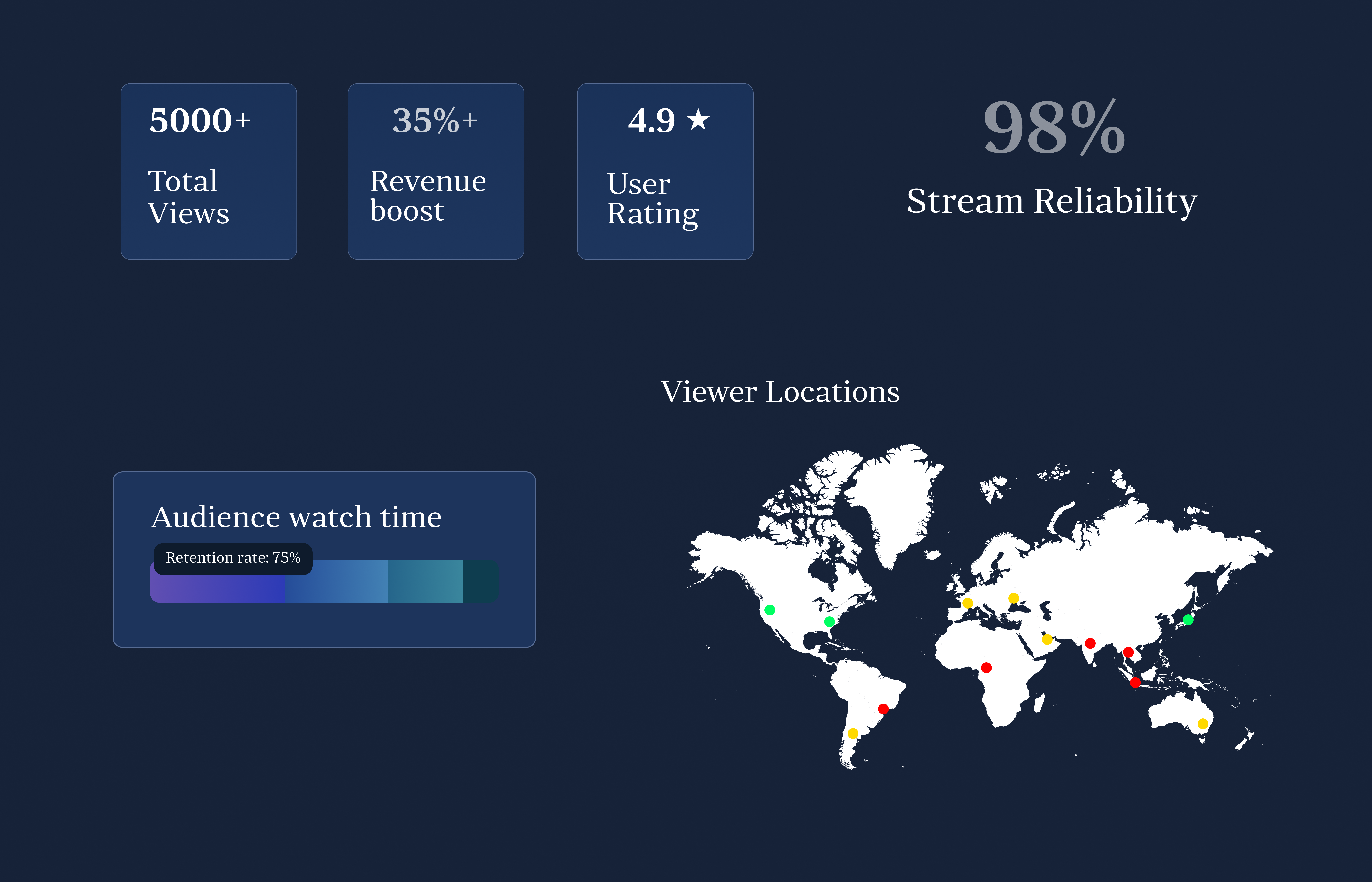
Launched paid live masterclasses with platform artists, confirming interest before expanding the program. The sessions reached 5,000+ viewers, increased revenue by 25%, and drove 45% user growth across 10+ masterclasses.
Context
ARTMO had an active community of artists and users, but revenue still depended mostly on marketplace activity. As the platform grew, there was increasing pressure to introduce a more reliable and predictable source of income.
Masterclasses were introduced as a new layer on top of the existing platform: live sessions that also remained available afterward as permanent content. The idea was to let artists interact directly with their audience while also creating material that could continue to be viewed and monetized over time.
The Challenge
Launching masterclasses was not just adding a feature. It introduced a new activity on the platform: live sessions hosted by artists that also needed to remain available afterward as permanent content. Success depended not only on running a live event, but on creating a process that could continue operating without constant manual or engineering involvement.
Artists as Hosts (Onboarding & Ownership)
Masterclasses were hosted by artists, not internal staff. We had to define who could host, how instructors would be onboarded, and how sessions would be scheduled and moderated.
Most hosts were non-technical, so the workflow needed to be simple enough for them to manage independently. If each session required direct technical support, the program would not scale.
Live Participation (Interactive Experience)
A passive video stream was not enough. To make live attendance worthwhile, sessions needed real-time interaction so participants could ask questions and engage with the artist during the event.
The value of the format depended on people joining at a specific time rather than watching later, so the live experience had to feel meaningfully different from recorded content.
Live to Permanent Content (Recording & Access)
Each session had to automatically become long-term content. Recordings needed to be stored, accessible, and available for on-demand viewing without manual handling so sessions could continue to be used and monetized afterward.
Cost & Infrastructure Constraints
The platform needed a globally accessible streaming solution capable of handling real usage with consistent quality, but it also had to remain within a startup budget.
If infrastructure costs increased with every session or required ongoing operational work, the program would not be sustainable.
Discovery & Attendance (Promotion Without Marketing)
Users needed a clear way to discover upcoming sessions and a reason to attend live events. Artists also needed a simple way to promote sessions to their audiences.
The program depended on platform visibility and artist-driven promotion rather than paid marketing, so attendance and communication had to work reliably for the format to generate revenue.
Platform Support
To make the masterclass program sustainable, the platform needed to support live events, ongoing access, and host independence. The technical setup was not an end in itself; it enabled artists to run sessions repeatedly while keeping operational work and costs manageable.
Live streaming
Reliable live streaming allowed artists to host sessions for a global audience without managing technical setup. Sessions could run consistently and did not require manual preparation before each event.
Real-time interaction
Live chat and questions enabled direct communication between artists and participants. This made attending live sessions worthwhile and differentiated them from recorded videos.
Automatic recordings
Every session was recorded and published for later viewing. Recordings remained accessible on the platform, allowing sessions to continue providing value and generating revenue after the live broadcast ended.
Access and payments
Sessions were connected to existing platform accounts and payment flows. Users could join without a separate purchase process, and artists could receive revenue without manual coordination or follow-up administration.
Host independence
Artists were able to schedule and manage sessions through the platform interface. After initial preparation, sessions could be run by hosts themselves, reducing the need for ongoing operational or engineering involvement.
My Role & Timeline
The goal was to confirm demand and understand the practical conditions required for both hosts and viewers before committing development effort.
At the same time, I coordinated internally on how recordings would be reviewed and published so the hosting process was predictable and repeatable.At the same time, I coordinated internally on how recordings would be reviewed and published so the hosting process was predictable and repeatable.
Based on this feedback, we adjusted session expectations, preparation materials, and the hosting workflow to make participation easier and more reliable.
The focus shifted from testing the concept to making it consistently usable.
At this stage the format functioned not only as a feature but as an ongoing engagement and revenue channel for the platform.
Results & Impact
The program moved from an experiment to a repeatable part of the platform and produced measurable business impact.
Adoption
Early sessions attracted consistent attendance, confirming users would join scheduled events rather than only consume passive content.
Revenue Impact
Paid sessions and continued access to recordings created a new revenue stream for the platform, contributing to an overall 25% increase in revenue.
Durability
Because each session remained available afterward, the same content continued to generate engagement and value without additional operational work.
User Growth
Introductory masterclasses brought new users to the platform and encouraged return visits. During Q4 2024, user growth increased by 45%.
Takeaways
The biggest lesson was that a live format only scales when hosting feels predictable for the instructor and attending feels worth it for the viewer. The product is not just the stream, it is the workflow around it.
Turning live sessions into permanent content changed the economics. Each masterclass kept delivering value after it ended, which made the program sustainable and reduced pressure to “start from zero” with every event.
Working with artists also reinforced that adoption depends on clarity and confidence. When expectations, scheduling, and the post-session process were simple, hosts were more willing to repeat sessions and promote them to their audience.
Want to discuss this project?
I'm always happy to share more details about the technical implementation or discuss how similar solutions could benefit your organization.
.png)