2023 – 2025
Creating Pipeline From Zero
Pipeline creation, investor outreach, and market entry through direct prospecting and structured sales conversations across multiple companies and markets.
In several projects I worked on, the challenge was not building a product but connecting it to the right people. Companies had a platform, service, or offering, but no predictable way to reach customers, partners, or investors. Instead of relying on inbound interest, I built outbound processes that identified decision makers, started conversations, and moved relevant prospects toward meetings, demos, and investor discussions.
Scope of Work
- B2B outbound prospecting and account research
- Cold email, LinkedIn outreach, and cold calling
- Discovery conversations and qualification
- Investor outreach and follow up coordination
- Demo preparation and partnership introductions
Context
Across several projects the core issue was the same: companies had a product, service, or funding goal, but no structured way to consistently reach the right people. Growth depended on inbound interest, personal networks, or occasional introductions, which made results unpredictable.
At ARTMO, the platform was preparing investment rounds and needed a way to identify and approach relevant investors across Europe, the Middle East, and South Asia while maintaining communication with existing investors. The work required researching investors, organizing communication, and supporting meetings.
At Ambacia, the objective was market entry into the DACH region. The company needed to identify target companies, reach decision makers, and start business discussions in a market where no prior relationships or inbound demand existed.
With the CompensationX platform, the goal became direct product interest. There was no existing pipeline, so opportunities had to be created through outbound prospecting, conversations, and follow up with HR and business leaders.
In all cases, the business problem was market access. My role was to create a repeatable process that connected companies to investors, partners, and potential customers through structured research, outreach, and follow up.
Targeting & Research
Outbound work started with deciding who to contact and why. Instead of broad outreach, I first defined target profiles based on the specific objective: fundraising, partnerships, or product interest.
For ARTMO, investor research focused on relevance rather than volume. I reviewed venture funds and angels based on stage, investment size, geography, and previous investments in marketplaces, creative platforms, and social networks. The goal was to approach investors already aligned with the business model instead of contacting funds randomly.
For Ambacia and CompensationX, the research focused on companies. I identified organizations based on hiring activity, company size, expansion signals, and operational structure. Decision makers were selected according to buying influence: HR leaders and finance stakeholders for CompensationX, and founders or operational leaders for collaboration discussions.
Before contacting anyone, I reviewed public information such as hiring plans, team size, and company structure. This allowed outreach to reference a relevant situation instead of a generic introduction and improved the likelihood of a response.
Outreach System
Once targets were identified, I used a consistent multichannel outreach process designed to create responses and move conversations forward. The objective was not a single message, but a sequence of touches that built context and increased the chance of a reply.
Channels used
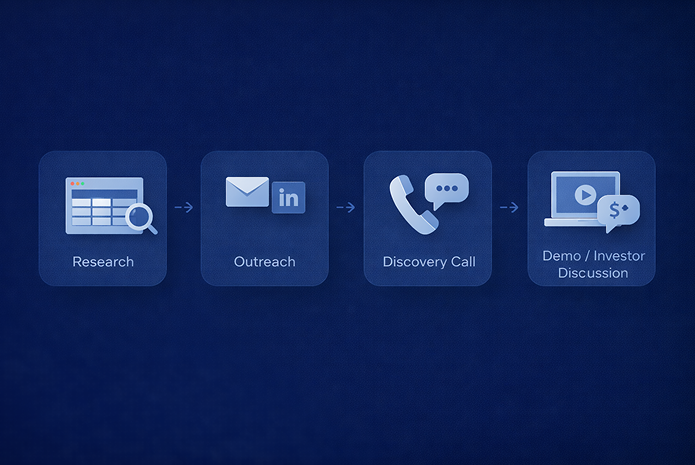
Outreach combined LinkedIn connection requests, short email sequences, and direct calling. LinkedIn was used as a soft entry point, email was used for clear positioning and follow up, and calls were used to create direct conversation with decision makers when digital outreach was not enough.
Cadence and follow ups
Contacts were reached through multiple touches over time. A typical sequence started with a LinkedIn connect, followed by a short message or email, then follow up touches, and finally a call attempt. If the timing was not right, I kept the contact active and returned later in the quarter or when a relevant trigger appeared (for example hiring activity or budgeting cycles).
Tracking and pipeline management
I tracked every account and contact with a clear status and next action. This avoided repeated outreach with no direction and made follow ups predictable. The tracking included basic account data, the decision maker role, last touch, response status, and next step (follow up, call, meeting, or demo).
Conversations & Qualification
Outreach alone did not create value. The goal of each contact was a conversation where I could understand the company’s situation and decide whether a meeting or demo made sense. When a prospect replied or answered a call, the focus shifted from introduction to discovery.
Discovery conversations
During calls I asked about hiring plans, team growth, budgeting cycles, and current processes. For HR leaders this often meant understanding how they determined salary ranges and whether they relied on internal data or external benchmarks. For collaboration discussions the focus was on capacity, hiring difficulties, and project workload.
Qualification
Not every conversation led to a meeting. I qualified opportunities based on timing, relevance, and decision ownership. When a company had upcoming hiring plans, compensation reviews, or operational bottlenecks, the discussion moved to a demo or a deeper meeting. If the timing was wrong, I scheduled a later follow up instead of continuing immediate outreach.
Handling objections
Common objections included “not a priority right now”, “we already use our own process”, or “we do not outsource”. Instead of ending the conversation, I clarified timing and context. Many initial rejections became future meetings once hiring cycles or internal needs changed.
These conversations determined which contacts became real opportunities and which remained future follow ups. The focus was to move relevant prospects to demos, partnership discussions, or investor meetings while keeping others in a structured follow up process.
Fundraising & Partnership Support
In addition to sales outreach, I supported fundraising and partnership communication. The work included investor research, preparation of communication materials, and follow up coordination before and after meetings.
Investor outreach and preparation
For ARTMO, I researched potential investors based on stage, investment focus, and geography, and helped maintain communication with existing investors during seed rounds. For Series A preparation, the outreach expanded toward investors in the Middle East and South Asia. I prepared background information, coordinated meetings, and supported follow up communication after discussions.
Meeting support and follow ups
I attended investor meetings in a supporting role, took notes, prepared materials, and coordinated post meeting communication. This ensured conversations continued after initial discussions and reduced response delays between the company and investors.
Funding and documentation support
I also supported research and documentation for funding applications, including preparation and follow up coordination. This contributed to successful funding support and helped maintain operational runway for the company.
Results & Impact
The outreach and communication processes moved the work from ad hoc conversations to a repeatable commercial pipeline. The results appeared across fundraising, partnerships, and product interest.
Fundraising
Supported investor communication and preparation during seed rounds that contributed to approximately €350k raised. Investor outreach into new regions initiated multiple investment discussions and extended the company’s operational runway.
Market entry
Initiated conversations with companies in new markets, including DACH region outreach and early partnership discussions. This created initial commercial presence where no prior network or inbound demand existed.
Product pipeline
For the CompensationX platform, outbound prospecting generated recurring discovery calls and scheduled product demos. The outreach created the first structured pipeline and validated interest from HR and business decision makers.
Funding support
Research and documentation coordination supported additional funding initiatives, including preparation work related to funding applications and communication follow ups.
What I Learned
Working on outreach, fundraising, and market entry showed that commercial traction depends more on targeting and follow up discipline than on message volume. A smaller number of relevant contacts consistently produced more conversations than broad outreach.
Timing mattered as much as interest. Many initial rejections were not true objections but timing issues. Structured follow ups aligned with hiring plans or budgeting cycles frequently turned previous “not now” responses into meetings.
Conversations created opportunities, not messages. Written outreach opened doors, but real progress happened only after direct discussions where needs, constraints, and priorities became clear.
Finally, consistent tracking proved essential. Maintaining clear next steps for each contact prevented lost opportunities and made outreach repeatable instead of reactive.
Discuss this project
If you would like more detail about the outreach process, qualification approach, or how similar pipeline creation could apply to your organization, feel free to reach out.